
Pest Control Southfields
A damaged threshold deserves attention, but the opening alone does not identify a pest. Describe the defect alongside the findings inside or outside the property.
Show the threshold in context
Keep access routes clear and safe
Ask which repair follows the evidence
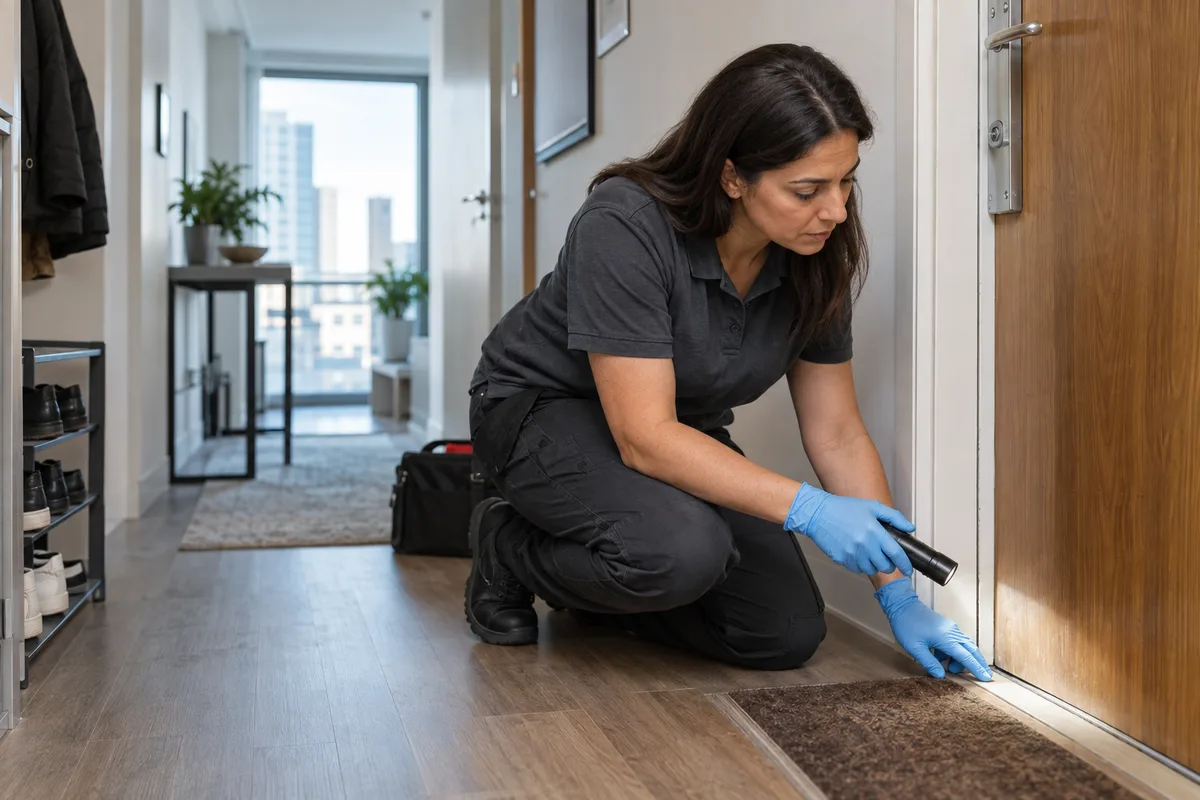
A photograph should show the whole doorway
A close-up of a gap can hide the detail that makes it useful: whether it belongs to an external entrance, internal cupboard or shared corridor. Take a photograph from an ordinary safe position that shows the doorway and surrounding frame, then a closer view if needed. Record whether the door closes fully and whether there is visible damage. Do not force a door or remove its fittings to demonstrate the problem. If it serves a communal entrance, tell the manager before arranging alterations.
Keep the defect separate from pest identification. A worn seal may be a maintenance issue without evidence of animal entry. Describe any direct sighting or sign at the premises, including its position relative to the doorway. The provider can then assess whether the opening is relevant, rather than treating a photograph of a threshold as proof that an indoor programme is needed.
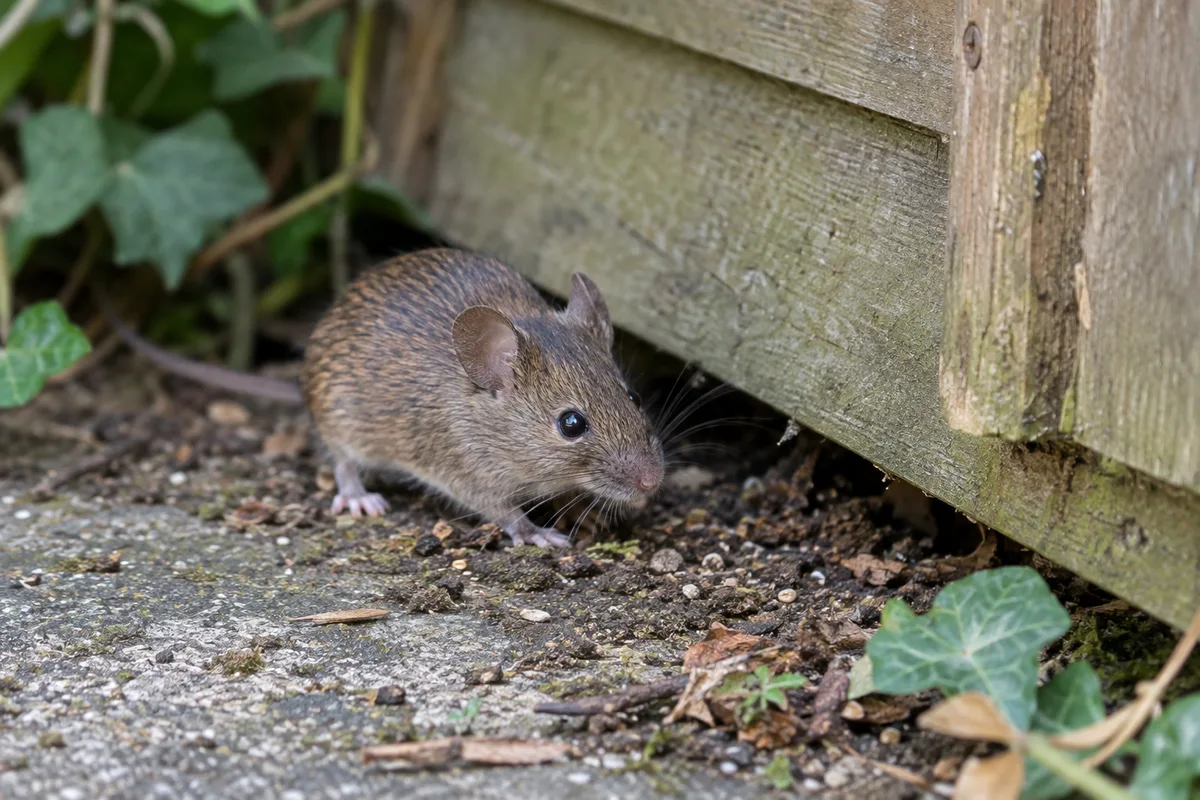
Compare a private entrance with an entrance serving several units
Use an illustrative doorway note to make the distinction visible. In a single house, the note might identify the front threshold, the occupier arranging inspection and the owner asked about a repair. In a converted building, it might identify the common outer threshold, separate flat doors behind it and the manager responsible for shared fabric. A finding within one flat should stay at its own position; it does not establish that the common doorway was used.
Wandsworth’s urban design study describes Southfields terraces and some former commercial or industrial premises converted into flats. Ask which arrangement your entrance actually serves, rather than infer it from its appearance. For example, a repair request naming the gap beneath the communal outer door is more useful than one saying the entrance needs sealing, which could be misunderstood as a private flat door. Give the intended feature and purpose to the appropriate professional; this page does not specify fire-door or other technical repair standards. Our assessment enquiry information helps clarify premises and access. Obtain the manager’s agreement where the feature is shared, while keeping the current pest evidence within the scope it genuinely supports.
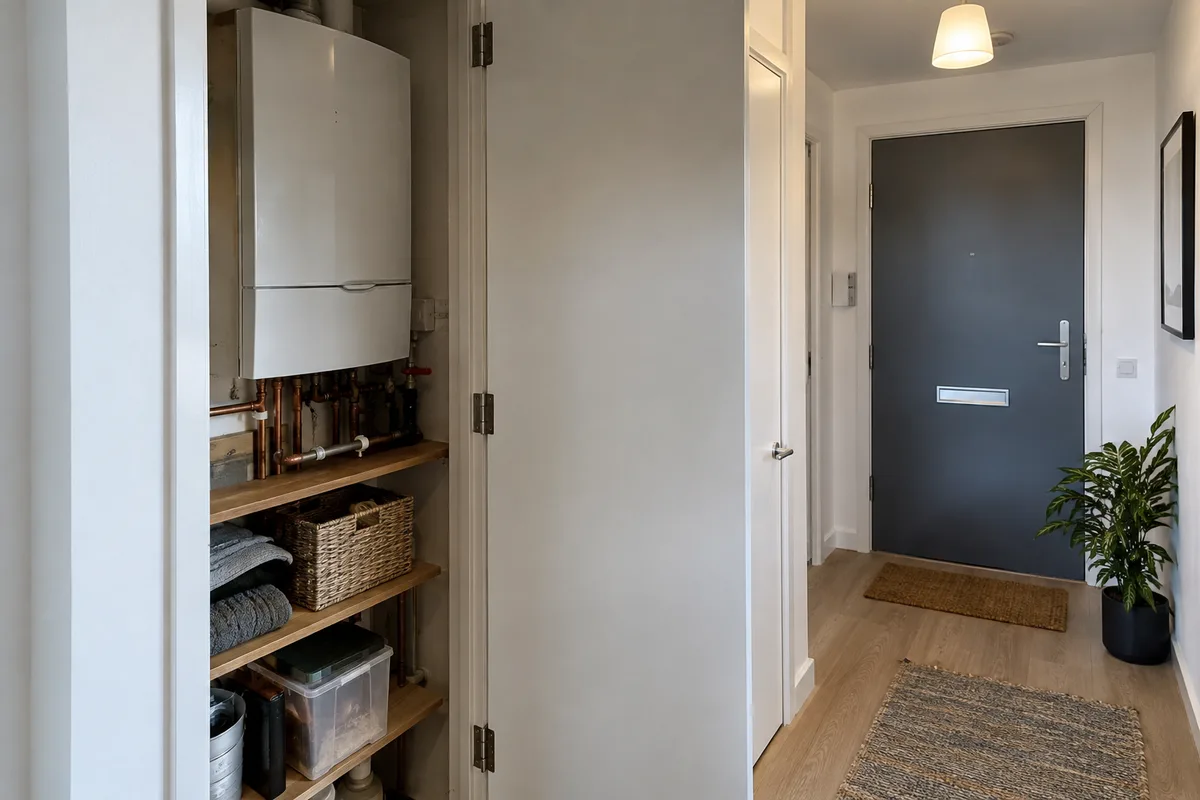
Use indoor signs to guide the questions
For a concern about mice, record food damage, sightings or suspect material by room and date. Avoid sweeping all findings into a statement that animals came through the door. A service penetration behind a kitchen unit or another concealed route may need consideration, but it should not be assumed either. Ask what evidence the provider can establish through accessible checks. The mouse inspection and treatment guide helps explain that sequence.
If a rat was seen outside, describe its location without converting it into an indoor diagnosis. Keep children and pets away from suspect material and request suitable cleaning guidance. Do not place retail treatment products at the threshold while waiting for advice, especially where others use the entrance. Tell the provider about any previous products, traps or repairs so the assessment can consider what has already changed.
A door repair has more than one requirement
A threshold or seal needs to work with the door’s intended function. Shared entrances may have security, accessibility or other building requirements that a pest repair must respect. Ask the responsible owner or manager to arrange an appropriate repair rather than attaching improvised material that prevents the door closing properly. Do not interfere with essential hardware. The inspection recommendation should describe the observed issue and intended purpose, leaving the competent repair method with the appropriate professional.
Our guide to proportionate pest proofing explains why different openings call for different solutions. A gap around a pipe and a gap beneath a door should not be treated as the same job. Ask which defect is supported by evidence and whether any remaining route needs investigation. Maintain required ventilation and access to building services while prevention work is planned.
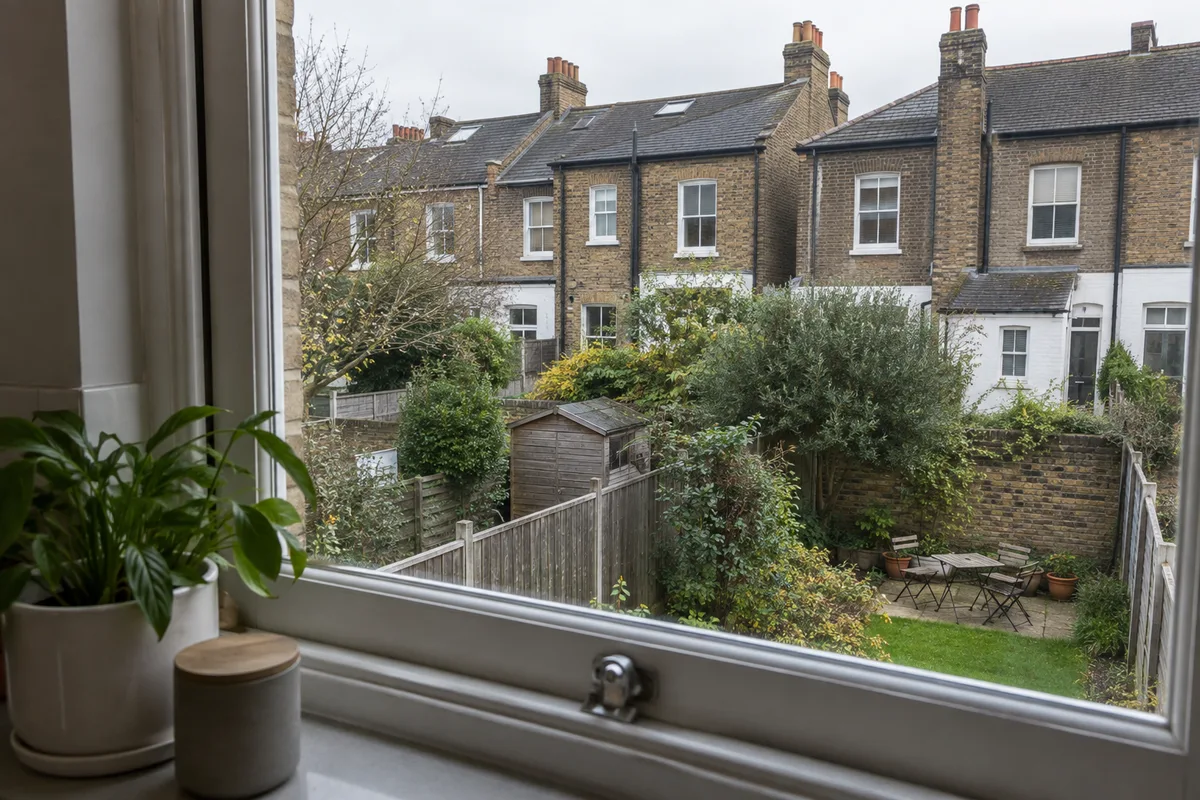
Preparation should not make the entrance unusable
Clearing inspection space can be helpful, but avoid stacking belongings in a shared stair or the only usable exit. Ask what is actually needed at the doorway and inside the affected room. Explain any heavy item that cannot safely be moved. If the proposed visit includes treatment, request its specific preparation and precautions rather than following instructions intended for a different pest or method. Mention children, pets and ordinary use of the entrance.
Clarify who will be present to admit the provider and approve any work beyond the initial scope. A neighbour holding a key may be able to open the building while lacking authority for repairs. Confirm that distinction in advance. Where a maintenance person needs to attend, coordinate the appointments so the inspection is not delayed by a locked door or an unapproved proposal.
Check what changed after the repair
Keep a dated photograph and work description once the threshold or seal has been repaired. Record any fresh findings separately from older marks that remain inside. Ask the provider what to report during the programme and how the repair will be considered at follow-up. Do not infer that a neat-looking door proves every route has been addressed. The review should connect current evidence with the completed work and any limitations on inspection.
For urgent pest control in Southfields, give the postcode, current findings and practical access details. Ask for the next available appointment and what it covers. Tell the provider if the doorway cannot currently be used safely or if communal permission is still pending. This makes the booking useful to both sides and avoids an appointment whose main purpose depends on an entrance nobody has arranged to open.
Questions about pest control in Southfields
Does a damaged door seal prove rodent entry?
No. It is a defect to assess alongside the actual findings and other accessible routes.
Can I repair a shared entrance myself?
Discuss the issue with the responsible manager. Suitable repairs must respect the door’s intended function and building requirements.
What should the doorway photograph include?
Show the whole doorway and its location, with a closer view of the defect where useful. Take it without forcing fittings or accessing unsafe areas.
Should I clear a blocked rear entrance before the visit?
Ask what access is needed and only move items safely. Keep shared routes and exits usable.
How do I document a completed threshold repair?
Keep the date, position, work description and a photograph, then record any fresh pest findings separately.